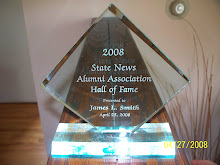
Not quite gone to California and John Bowman sent me a link to another newspaper blog.
Check it out and I'll put in on my link list:
http://gradethenews.org/index.htm
I really commend to your reading the following article:
October 17, 2007
Changes at the Mercury News
The same timidity and stupidity is not limited to Michigan.
Thursday, January 10, 2008


Wednesday, January 9, 2008
California here I come....
I'm heading to my native California for a three week vacation with my two sons and granddaughter. I will also check in with a favorite cousin and my sister.
Retired employees at the police department where I was once employed will be getting together for lunch to catch up as well.
What this all means is that blogging will go down for the next little while. However, I may have access from time to time to a borrowed computer and I will check in and perhaps get a chance to blog.
In the meantime, especially if you are new to freefromeditors.blogspot.com, please go back to the first posts, catch up and comment.
See ya' soon.
Retired employees at the police department where I was once employed will be getting together for lunch to catch up as well.
What this all means is that blogging will go down for the next little while. However, I may have access from time to time to a borrowed computer and I will check in and perhaps get a chance to blog.
In the meantime, especially if you are new to freefromeditors.blogspot.com, please go back to the first posts, catch up and comment.
See ya' soon.
Tuesday, January 8, 2008
It just gets worser and worser
Here's a link to a truly disturbing story provided by a blog reader:
http://www.msnbc.msn.com/id/22421466/
No self-respecting editor would reign over the destruction of his/her own newsroom or capitulate to this kind of bottom line mentality.
Where have all the real editors gone? Gone to corporate board rooms every one.
Look for a blog item here soon on the loss of cajones/or the female gender equivalent of chief editors.
Thanks to the loyal reader for the msnbc link.....
http://www.msnbc.msn.com/id/22421466/
No self-respecting editor would reign over the destruction of his/her own newsroom or capitulate to this kind of bottom line mentality.
Where have all the real editors gone? Gone to corporate board rooms every one.
Look for a blog item here soon on the loss of cajones/or the female gender equivalent of chief editors.
Thanks to the loyal reader for the msnbc link.....
Monday, January 7, 2008
Another former news employee chimes in
Another, short interesting journalism related article. Pretty cool blog too!
http://realitybitesback.blogspot.com/2008/01/hey-mac-wanna-buy-paper-cheap.html
Follow the link in the blog entry to the article by Alan Mutter for much bad news
I've also begun to add new blogs I've found that relate to the newspaper industry and its current troubles. Fading to Black is a good one, which I have added to my list.
http://realitybitesback.blogspot.com/2008/01/hey-mac-wanna-buy-paper-cheap.html
Follow the link in the blog entry to the article by Alan Mutter for much bad news
I've also begun to add new blogs I've found that relate to the newspaper industry and its current troubles. Fading to Black is a good one, which I have added to my list.
Things are spinning in San Jose
More bad newspaper news, this time about an old friend of mine, Carole Leigh Hutton and her short tenure at the San Jose Mercury News.
http://spinditties.blogspot.com/2008/01/alas-carole-leigh-we-hardly-knew-ye.html
http://spinditties.blogspot.com/2008/01/alas-carole-leigh-we-hardly-knew-ye.html
Saturday, January 5, 2008
One size fits all
Managing a news room is not an easy task, although with a little common sense it can be a lot simpler than many editors make it.
Early in my career I was the editor of the Michigan State News, a major college daily newspaper. A few years later, I was editor of a chain of mid-Michigan weekly newspapers.
Reporters are by nature somewhat generalists. They are required to do a variety of tasks and cover a variety of stories sometimes with little or no background in the subject or person they are covering.
Some reporters are skilled at gathering information and getting people to talk. Others are more skilled at putting together artful prose and organizing stories. It's the rare combination that is excellent at both.
Where editors often fail is in recognizing over time the best skills of individuals. At the Flint Journal, the top editors are seemingly blind to the overall skill sets of their employees.
In many cases, reporters who would excel at gathering information and producing daily news copy are pushed and dragged into producing long, boring features that take them away from what they do best. And what readers enjoy reading most.
Likewise reporters who are tops at producing good, readable feature copy are pressed into service at covering breaking news.
There will always be some of that at any newspaper, but it should be minimized.
Skilled investigative reporters are in the rotation for the annoyingly boring "Making A Difference" or Sunday feature stories, which inevitably drain time away from actual news coverage.
At one point I even mentioned to the two top editors that it appeared they were constantly trying to pound the round peg into the square hole personnel wise. But like most of the input that I, and other reporters offered, it was completely ignored.
A good manager tries to fit people to their strengths.
Choosing beats is a good example. Last year, a couple reporters requested a change of beat - they do get stale after a while - and even told the editors what beat they might want to cover.
What happened was a gosh awful musical beat arrangement that left many unhappy reporters and others simply scratching their heads. No one got a beat they had requested and many were placed in beats they absolutely didn't want, even when someone else did.
Some blamed it on a power trip by one editor. I think it was simple incompetence.
If a change in beats is needed, a good manager might put up a list of available beats and ask reporters to apply for one that interests them. Better to have someone covering a beat they want than dragging them into a beat for which they have little, or no interest.
Where there was a conflict, then an editor could determine who had the better skills to cover a coveted beat.
But not at the Flint Journal.
In another posting, I'll let you know about the brainiac idea to have daily and weekly reporters for Flint Journal owned publications begin competing with each other despite a lack of manpower in 2007. This was stupid on parade.
During the long slide of the paper, forced beat changes had been carried out several times, but somehow the people running the editorial content of the paper remained untouched in their positions.
To use a sports analogy, the ownership of this company fired or changed the whole team instead of looking at changing the manager. Trust me, a change in managers is sorely needed on this team.
In some cases, especially with the new buyouts, reporters are being piled on with additional beat responsibilities, while the number of main editors remains the same.
Readers may not be aware, but some reporters are covering whole counties and parts of others as part of one beat. It is not possible to cover as many townships, cities and villages as some of the reporters are being asked to cover and do it well.
Heck when I was there I covered all of one county, three townships and five school districts in another. Since I left, my old beat has been added to that of another reporter who was already covering three townships and several school districts.
Any smart editor would know that is an impossible task, one that sets up a person for failure.
But hey, it wouldn't do to have an editor pick up a phone or drive to a meeting and help out instead of hosting another stupid meeting to discuss Sunday story ideas for stories that no one will read.
So when a story in your area does not get covered as you believe it should have, just remember that it might have been your reporters turn to do a "Making a Difference."
The Flint Journal has uniquely skilled reporters, although they are dwindling in numbers, who given proper management could continue to produce a newspaper that would interest and gather readers.
During the time I was an editor I found it much easier - and more productive - to fit people to their interests and skills. It made for enthusiastic and motivated employees.
Good editors turn people loose to find good stories and news, bad ones put the bit in a reporter's mouth and pull back as hard as they can.
Early in my career I was the editor of the Michigan State News, a major college daily newspaper. A few years later, I was editor of a chain of mid-Michigan weekly newspapers.
Reporters are by nature somewhat generalists. They are required to do a variety of tasks and cover a variety of stories sometimes with little or no background in the subject or person they are covering.
Some reporters are skilled at gathering information and getting people to talk. Others are more skilled at putting together artful prose and organizing stories. It's the rare combination that is excellent at both.
Where editors often fail is in recognizing over time the best skills of individuals. At the Flint Journal, the top editors are seemingly blind to the overall skill sets of their employees.
In many cases, reporters who would excel at gathering information and producing daily news copy are pushed and dragged into producing long, boring features that take them away from what they do best. And what readers enjoy reading most.
Likewise reporters who are tops at producing good, readable feature copy are pressed into service at covering breaking news.
There will always be some of that at any newspaper, but it should be minimized.
Skilled investigative reporters are in the rotation for the annoyingly boring "Making A Difference" or Sunday feature stories, which inevitably drain time away from actual news coverage.
At one point I even mentioned to the two top editors that it appeared they were constantly trying to pound the round peg into the square hole personnel wise. But like most of the input that I, and other reporters offered, it was completely ignored.
A good manager tries to fit people to their strengths.
Choosing beats is a good example. Last year, a couple reporters requested a change of beat - they do get stale after a while - and even told the editors what beat they might want to cover.
What happened was a gosh awful musical beat arrangement that left many unhappy reporters and others simply scratching their heads. No one got a beat they had requested and many were placed in beats they absolutely didn't want, even when someone else did.
Some blamed it on a power trip by one editor. I think it was simple incompetence.
If a change in beats is needed, a good manager might put up a list of available beats and ask reporters to apply for one that interests them. Better to have someone covering a beat they want than dragging them into a beat for which they have little, or no interest.
Where there was a conflict, then an editor could determine who had the better skills to cover a coveted beat.
But not at the Flint Journal.
In another posting, I'll let you know about the brainiac idea to have daily and weekly reporters for Flint Journal owned publications begin competing with each other despite a lack of manpower in 2007. This was stupid on parade.
During the long slide of the paper, forced beat changes had been carried out several times, but somehow the people running the editorial content of the paper remained untouched in their positions.
To use a sports analogy, the ownership of this company fired or changed the whole team instead of looking at changing the manager. Trust me, a change in managers is sorely needed on this team.
In some cases, especially with the new buyouts, reporters are being piled on with additional beat responsibilities, while the number of main editors remains the same.
Readers may not be aware, but some reporters are covering whole counties and parts of others as part of one beat. It is not possible to cover as many townships, cities and villages as some of the reporters are being asked to cover and do it well.
Heck when I was there I covered all of one county, three townships and five school districts in another. Since I left, my old beat has been added to that of another reporter who was already covering three townships and several school districts.
Any smart editor would know that is an impossible task, one that sets up a person for failure.
But hey, it wouldn't do to have an editor pick up a phone or drive to a meeting and help out instead of hosting another stupid meeting to discuss Sunday story ideas for stories that no one will read.
So when a story in your area does not get covered as you believe it should have, just remember that it might have been your reporters turn to do a "Making a Difference."
The Flint Journal has uniquely skilled reporters, although they are dwindling in numbers, who given proper management could continue to produce a newspaper that would interest and gather readers.
During the time I was an editor I found it much easier - and more productive - to fit people to their interests and skills. It made for enthusiastic and motivated employees.
Good editors turn people loose to find good stories and news, bad ones put the bit in a reporter's mouth and pull back as hard as they can.
Thursday, January 3, 2008
Top 10 story list a joke
Every year the Flint Journal posts its top 10 story list based on the votes of its staff combined with its online readership.
This year, the voters picked - ta-da - Lakisha Jones and her fourth place appearance on American Idol as the top story of 2007.
What the Journal didn't bother to tell its readers was the actual vote that led to the Top 10 listings in the paper. They rarely do, partly because they are embarassed at the ridiculously low number of voters who make the picks.
The Journal, in seeking to be credibile, should at least be honest about the number of people who make the story selection for the list.
I'm not privy to the actual vote totals, but I'll wager dollars to doughnuts that less than 15 staff members and less than 40 readers are the source of the Top 10 list. That's out of an editorial staff of 60-80 people and a total subscription base of about 100,000.
Mathematically, I don't think that puny number would even register on a calculator, not without a few zeroes in front of a whole number.
LaKisha Jones was a good local story, but editorial management decided that Jones was the path to journalistic salvation. Seriously - they said the following in meetings - that they believed if we saturated the paper with Jones news, young people would come flocking back to the paper, we would attract advertisers and save the newspaper.
Five months later, they offered a massive buyout to stem the financially bleeding at the paper.
To cover the Jones story, management took a full-time reporter off her beat covering two major suburban communities and told her to find a front page story everyday about LaKisha.
That reporter, Sally York, did yeoman's work in finding different angles everyday so that readers would never be deprived of some tidbit of the Jones story.
More remarkable because, Jones and most of her family were not allowed to talk to the Journal during the show's airing time. So while the Journal became a shill for a popular TV show, not even the show allowed access to the star the paper was shilling.
Meanwhile, York's regular beat went bascially uncovered for months. Don't blame Sally, she was doing what she was told to do and she did it very, very well.
So if you had a story last year that you thought was worth covering and didn't get covered, blame LaKisha. With American Idol starting up again this month, local readers can only hope that whatever divas make the final cut won't be from the Flint area or plan on similar overkill in 2008.
The Jones story should have been covered, but not at the expense of two local communities and significant front page space. Trust me, many reporters at the Journal were very embarassed by the Jones overkill, but were powerless to stop it.
This year, the voters picked - ta-da - Lakisha Jones and her fourth place appearance on American Idol as the top story of 2007.
What the Journal didn't bother to tell its readers was the actual vote that led to the Top 10 listings in the paper. They rarely do, partly because they are embarassed at the ridiculously low number of voters who make the picks.
The Journal, in seeking to be credibile, should at least be honest about the number of people who make the story selection for the list.
I'm not privy to the actual vote totals, but I'll wager dollars to doughnuts that less than 15 staff members and less than 40 readers are the source of the Top 10 list. That's out of an editorial staff of 60-80 people and a total subscription base of about 100,000.
Mathematically, I don't think that puny number would even register on a calculator, not without a few zeroes in front of a whole number.
LaKisha Jones was a good local story, but editorial management decided that Jones was the path to journalistic salvation. Seriously - they said the following in meetings - that they believed if we saturated the paper with Jones news, young people would come flocking back to the paper, we would attract advertisers and save the newspaper.
Five months later, they offered a massive buyout to stem the financially bleeding at the paper.
To cover the Jones story, management took a full-time reporter off her beat covering two major suburban communities and told her to find a front page story everyday about LaKisha.
That reporter, Sally York, did yeoman's work in finding different angles everyday so that readers would never be deprived of some tidbit of the Jones story.
More remarkable because, Jones and most of her family were not allowed to talk to the Journal during the show's airing time. So while the Journal became a shill for a popular TV show, not even the show allowed access to the star the paper was shilling.
Meanwhile, York's regular beat went bascially uncovered for months. Don't blame Sally, she was doing what she was told to do and she did it very, very well.
So if you had a story last year that you thought was worth covering and didn't get covered, blame LaKisha. With American Idol starting up again this month, local readers can only hope that whatever divas make the final cut won't be from the Flint area or plan on similar overkill in 2008.
The Jones story should have been covered, but not at the expense of two local communities and significant front page space. Trust me, many reporters at the Journal were very embarassed by the Jones overkill, but were powerless to stop it.
Monday, December 31, 2007
Not all the blame is on editors
My friend Todd has found some sad news out of Ohio and Kentucky to end the old year. Clearly newspapers are the buggy whip industry of this new century.
Two newspapers, the Cincinnati Post and the Kentucky Post, which serve the northern Kentucky and Cincinnati metropolitan area are closing their doors today. At least one of the papers has been in continuous service for 126 years.
While I believe editors could do much to stall or arrest the downward spiral by giving readers the breaking news they really want - and not the cultural crud that a few members of focus group tell them - clearly there are bigger forces at work.
Todd sent along this link, which is sad, but excellent reading for anyone concerned about the future of the home delivered newspaper:
http://news.cincypost.com/apps/pbcs.dll/article?AID=/20070717/EDIT/707170341
If I don't post again today, may you all have a Happy New Year (editors included!) and may 2008 be a kinder and gentler year for everyone.
Two newspapers, the Cincinnati Post and the Kentucky Post, which serve the northern Kentucky and Cincinnati metropolitan area are closing their doors today. At least one of the papers has been in continuous service for 126 years.
While I believe editors could do much to stall or arrest the downward spiral by giving readers the breaking news they really want - and not the cultural crud that a few members of focus group tell them - clearly there are bigger forces at work.
Todd sent along this link, which is sad, but excellent reading for anyone concerned about the future of the home delivered newspaper:
http://news.cincypost.com/apps/pbcs.dll/article?AID=/20070717/EDIT/707170341
If I don't post again today, may you all have a Happy New Year (editors included!) and may 2008 be a kinder and gentler year for everyone.
Sunday, December 23, 2007
Merry Christmas
There will be a short hiatus from blogging.
Christmas is here, family and travel beckon.
From my family to yours we wish you a Merry Christmas and may you realize the joy of the reason for the season.Also remember that in giving to those less fortunate we receive the greatest gift of all.
I'll be back late next week, but before New Year's. Feel free to post away. If I get a chance and there is an Internet connection I can pirate, I'll check in.
Christmas is here, family and travel beckon.
From my family to yours we wish you a Merry Christmas and may you realize the joy of the reason for the season.Also remember that in giving to those less fortunate we receive the greatest gift of all.
I'll be back late next week, but before New Year's. Feel free to post away. If I get a chance and there is an Internet connection I can pirate, I'll check in.
Making my case
The Sunday, Dec. 23 Flint Journal is a perfect example of what I wrote about in a previous post.
Feature stories dominate nearly all of the front section, including a main piece of art about a sports story on a basketball player.
The feature story on domestic violence is a good story, but is it more newsworthy that the traffic deaths of two local men on Saturday? That story, the first actual news story in the paper can be found on page A-9. That's a long way to have to look for news in a newspaper.
Perhaps the biggest news atrocity in the paper is the nearly two-page feature on a tired old feature, dreamed up by a clueless editor, called "Making a Difference." The Sunday feature on the feature series starts on the front page and then takes up the entire second page of the newspaper is a rehash of people who have already had their 15 minutes of fame.
Trust me, the reporters at the paper despise doing these stories and they take away from the actual reporting that should be done. But one editor believes this feature is a vital part of the newspaper. Not so vital if you take into account the current financial state of the paper.
Please leave me a comment if the reason you buy the Flint Journal is to read the weekly "Making a Difference" feature.
Good reporters will find these stories naturally as they work a beat, but this feature is based on a quota schedule and is a forced effort to find good news. It also gives the editor a guaranteed piece of art and story for the Friday newspaper.
So literally the front page is devoid of any breaking news. So is page 2, page 3 and any other page until you get to A-9. Not much for the now $2 you must now spend for the Sunday paper.
Subscribers should demand the Flint Journal, and all daily newspapers, return to the primary mission of finding and reporting breaking news and investigative pieces. And when they have breaking news, put it up front where it belongs.
Just because an editor doesn't like breaking news, or that it gets in the way of a planned layout, doesn't mean that it shouldn't be covered or displayed properly.
Feature stories dominate nearly all of the front section, including a main piece of art about a sports story on a basketball player.
The feature story on domestic violence is a good story, but is it more newsworthy that the traffic deaths of two local men on Saturday? That story, the first actual news story in the paper can be found on page A-9. That's a long way to have to look for news in a newspaper.
Perhaps the biggest news atrocity in the paper is the nearly two-page feature on a tired old feature, dreamed up by a clueless editor, called "Making a Difference." The Sunday feature on the feature series starts on the front page and then takes up the entire second page of the newspaper is a rehash of people who have already had their 15 minutes of fame.
Trust me, the reporters at the paper despise doing these stories and they take away from the actual reporting that should be done. But one editor believes this feature is a vital part of the newspaper. Not so vital if you take into account the current financial state of the paper.
Please leave me a comment if the reason you buy the Flint Journal is to read the weekly "Making a Difference" feature.
Good reporters will find these stories naturally as they work a beat, but this feature is based on a quota schedule and is a forced effort to find good news. It also gives the editor a guaranteed piece of art and story for the Friday newspaper.
So literally the front page is devoid of any breaking news. So is page 2, page 3 and any other page until you get to A-9. Not much for the now $2 you must now spend for the Sunday paper.
Subscribers should demand the Flint Journal, and all daily newspapers, return to the primary mission of finding and reporting breaking news and investigative pieces. And when they have breaking news, put it up front where it belongs.
Just because an editor doesn't like breaking news, or that it gets in the way of a planned layout, doesn't mean that it shouldn't be covered or displayed properly.
Thursday, December 20, 2007
Sometimes no news is hypocrisy
In the 1990s, the daily newspaper I worked for published an editorial criticizing the entire state of Arizona for not observing the Martin Luther King holiday.
It was a well written, concise logical argument on a hot story at the time. What the newspaper left out of its editorial is that no one at the newspaper observed the holiday either. In fact, Arizona eventually adopted the holiday, but the newspaper still does not give the January day off to its employees.
In September the Flint Journal, in Flint, Michigan, offered all full-time employees a very generous buyout. It is the reason I am now retired. But what is interesting is that the newspaper, which has covered buyout news from large and small companies, as well as government agencies, has ignored the news of its own downsizing.
Two local television stations carried the news with only a minimum of comment from the newspaper, which did not authorize any employees to discuss the buyouts publicly. A strange restriction from an organization that demands openness from everyone else.
So here is the story that has not yet appeared in the Flint Journal:
FLINT - In a last ditch effort to stop the financial bleeding, the Flint Journal has offered most full-time employees very generous buy outs aimed at significantly reducing the size of the newspaper staff.
Plummeting ad revenues have resulted in unprecedented losses at the Flint Journal and other daily newspapers.
The publisher met with all the newspaper staff in mid-September and announced that anyone with two years or more of full-time employment would qualify for a buy out consisting of four weeks pay for each full year of full-time employment.
A fifth week for each year was available for any employee who declined the newspapers offer of continued health insurance.
For employees over 50, health insurance benefits were offered to age 65 and for employees under 50, the health benefits were offered for two years.
Deadline for employees to take the buyout was Oct. 29. The previous year the paper offered a buyout of two weeks for each year and only eight employees accepted the offer prompting the new round of buyouts.
While the paper's editor had anticipated 16-18 editorial employees to take the buyout, more than 40 took the deal, leaving the paper in the strange position of having to rehire new employees to replace the many veteran reporters and editors who are leaving.
Flint Journal wide the numbers were more than 80 employees who will be leaving between now and July 1. A little more than 200 employees were eligible for the buy outs.
Some of the Journals most recognizable bylines have left or will leave the paper soon. The entire business desk will leave the paper by early 2008.
The buyout period was also an opportunity for the editorial management to clean house of folks it no longer wanted in the newsroom with some reporters and editors strongly advised to take the offer even though they wanted to stay.
While the newspaper agreed that its lifetime employment policy remained in effect, it was made clear that reporters, advertising and other business employees could be reassigned anywhere in the chain of newspapers following the buyout period.
New reporters and employees hired for the newspaper would be hired under a lower pay scale with different benefits.
Many of the departing employees were grateful for the generosity of the offer and wished the remaining employees well in the effort to right the ship.
In explaining the buy out, the publisher said the paper's condition was dire and that drastic actions were need to save the paper.
With the loss of so many reporters, those remaining have been told they will continue to cover the beats they currently report on as well as picking up additional beats from the departing employees.
The Journal's position is not unlike that of most major daily newspapers in the country which are financially bleeding from the new dominance of free online news web services.
(Now that's the story that should have been written by the paper, but to date is still not published.)
It was a well written, concise logical argument on a hot story at the time. What the newspaper left out of its editorial is that no one at the newspaper observed the holiday either. In fact, Arizona eventually adopted the holiday, but the newspaper still does not give the January day off to its employees.
In September the Flint Journal, in Flint, Michigan, offered all full-time employees a very generous buyout. It is the reason I am now retired. But what is interesting is that the newspaper, which has covered buyout news from large and small companies, as well as government agencies, has ignored the news of its own downsizing.
Two local television stations carried the news with only a minimum of comment from the newspaper, which did not authorize any employees to discuss the buyouts publicly. A strange restriction from an organization that demands openness from everyone else.
So here is the story that has not yet appeared in the Flint Journal:
FLINT - In a last ditch effort to stop the financial bleeding, the Flint Journal has offered most full-time employees very generous buy outs aimed at significantly reducing the size of the newspaper staff.
Plummeting ad revenues have resulted in unprecedented losses at the Flint Journal and other daily newspapers.
The publisher met with all the newspaper staff in mid-September and announced that anyone with two years or more of full-time employment would qualify for a buy out consisting of four weeks pay for each full year of full-time employment.
A fifth week for each year was available for any employee who declined the newspapers offer of continued health insurance.
For employees over 50, health insurance benefits were offered to age 65 and for employees under 50, the health benefits were offered for two years.
Deadline for employees to take the buyout was Oct. 29. The previous year the paper offered a buyout of two weeks for each year and only eight employees accepted the offer prompting the new round of buyouts.
While the paper's editor had anticipated 16-18 editorial employees to take the buyout, more than 40 took the deal, leaving the paper in the strange position of having to rehire new employees to replace the many veteran reporters and editors who are leaving.
Flint Journal wide the numbers were more than 80 employees who will be leaving between now and July 1. A little more than 200 employees were eligible for the buy outs.
Some of the Journals most recognizable bylines have left or will leave the paper soon. The entire business desk will leave the paper by early 2008.
The buyout period was also an opportunity for the editorial management to clean house of folks it no longer wanted in the newsroom with some reporters and editors strongly advised to take the offer even though they wanted to stay.
While the newspaper agreed that its lifetime employment policy remained in effect, it was made clear that reporters, advertising and other business employees could be reassigned anywhere in the chain of newspapers following the buyout period.
New reporters and employees hired for the newspaper would be hired under a lower pay scale with different benefits.
Many of the departing employees were grateful for the generosity of the offer and wished the remaining employees well in the effort to right the ship.
In explaining the buy out, the publisher said the paper's condition was dire and that drastic actions were need to save the paper.
With the loss of so many reporters, those remaining have been told they will continue to cover the beats they currently report on as well as picking up additional beats from the departing employees.
The Journal's position is not unlike that of most major daily newspapers in the country which are financially bleeding from the new dominance of free online news web services.
(Now that's the story that should have been written by the paper, but to date is still not published.)
Sunday, December 16, 2007
A chance to vent
OK, I've had my chance to vent about editors. (And I'll do so again)
But now it's your turn. I'm hoping to collect a large number of the most egregious mistakes that happened after reporters turned in a story. In another words, those mistakes that were avoidable, frustrating and editor caused.
I'll even entertain the stupid questions that editors frequently ask reporters. Example: "Was the bus moving when it hit the man?" (An actual editor question)."What time are the Fourth of July Fireworks?" (Yes, another real editor question)
My answer: "When it gets dark."
Feel free to comment anonymously, but it might be a mistake to post from work. As we all know, freedom of the press and speech does not mean you will not be punished for exercising it, especially at a newspaper. So hold your fire until you are home, but then fire away.
But now it's your turn. I'm hoping to collect a large number of the most egregious mistakes that happened after reporters turned in a story. In another words, those mistakes that were avoidable, frustrating and editor caused.
I'll even entertain the stupid questions that editors frequently ask reporters. Example: "Was the bus moving when it hit the man?" (An actual editor question)."What time are the Fourth of July Fireworks?" (Yes, another real editor question)
My answer: "When it gets dark."
Feel free to comment anonymously, but it might be a mistake to post from work. As we all know, freedom of the press and speech does not mean you will not be punished for exercising it, especially at a newspaper. So hold your fire until you are home, but then fire away.
Friday, December 14, 2007
Clueless bank robber leaves big clue
OK, we'll give the bad editors a break today. One of the fun things I did during my newspaper career was to start and write a weekly column on stupid criminals. It started out as "Night Beat" and later morphed into "Off Beat" when my shift changed in the late 1990s.
You can still find the column, which is now written by the Flint Journal's Bryn Mickle at mlive.com, click on the Flint Journal and then look through the offerings for columns and click on Off Beat.
One of my favorites was the story provided by Flint police detectives about a man who robbed a local bank branch. Apparently before leaving home the robber scribbled his note on the back of a piece of paper and headed to the bank.
Once at the bank he said nothing, but slid the note to the teller who handed over the cash and the man fled leaving behind the note.
When police retrieved the note from the teller they turned it over and discovered the note was written on the back of a copy of his birth certificate, which led them directly to the suspect.
See you soon.
You can still find the column, which is now written by the Flint Journal's Bryn Mickle at mlive.com, click on the Flint Journal and then look through the offerings for columns and click on Off Beat.
One of my favorites was the story provided by Flint police detectives about a man who robbed a local bank branch. Apparently before leaving home the robber scribbled his note on the back of a piece of paper and headed to the bank.
Once at the bank he said nothing, but slid the note to the teller who handed over the cash and the man fled leaving behind the note.
When police retrieved the note from the teller they turned it over and discovered the note was written on the back of a copy of his birth certificate, which led them directly to the suspect.
See you soon.
Thursday, December 13, 2007
Putting the dead in deadlines
One of the great myths of newspaper journalism is how technology would speed up or improve the production of the newspaper.
As one who spanned several generations of new technology: Hot type, IBM Selectric (the worst type setting system every invented), crude computer word processors, ATEX and later Macs, the one that provided the greatest flexibility for updating and providing the freshest news in the newspaper was, ta-da, hot type.
Yes, the older technology allowed afternoon newspapers (the ones I'm familiar with) to update news and freshen its pages up to nearly noon (before I came around that deadline even extended into the early afternoon).
Now the dirty little secret is that after 8:30 a.m. at most afternoon papers there is little or no updating and for morning papers, the news is 8-10 hours old by the time it gets to your doorstep. Most of the news in your afternoon newspaper is from the previous day or the day before. If you don't believe me go to your newspaper's website and see what stories in the newspaper you received at home that day were on the paper's website early the day before. Sometimes the day before that.
Newsrooms now plan for Sunday front pages, weeks in advance. Long, boring features with beautiful stunning pictures now replace what in earlier days would be the breaking news of a Friday night or Saturday or a focused rehash of the major story of the week before.
But those long, boring features allow editors to layout the newspaper (editors love pretty pages) days in advance and then they pray that nothing major will happen that will make them cut a hole in their front page artwork to squeeze in a real news story for Sunday.
Often you will find major fires, fatalities or murders stuck in a page 2 hole or inside so as not to break up a potentially award-winning layout for an editor.
Newspapers would win back readers, especially to weekend papers if they would actually treat Saturday and Sunday like a regular news day.
The daily I worked for used to staff a regular reporter on Saturday and Sunday. The weekend shift was part of their regular responsibilities. They developed news sources and provided actual news for Sunday and Monday editions.
In later years, staff members were assigned to work on Saturday on a rotating basis, which didn't allow for the development of sources and the Sunday shift was sometimes used to punish a reporter that an editor wasn't particularly happy with.
More later on how editors rotate beats.
As one who spanned several generations of new technology: Hot type, IBM Selectric (the worst type setting system every invented), crude computer word processors, ATEX and later Macs, the one that provided the greatest flexibility for updating and providing the freshest news in the newspaper was, ta-da, hot type.
Yes, the older technology allowed afternoon newspapers (the ones I'm familiar with) to update news and freshen its pages up to nearly noon (before I came around that deadline even extended into the early afternoon).
Now the dirty little secret is that after 8:30 a.m. at most afternoon papers there is little or no updating and for morning papers, the news is 8-10 hours old by the time it gets to your doorstep. Most of the news in your afternoon newspaper is from the previous day or the day before. If you don't believe me go to your newspaper's website and see what stories in the newspaper you received at home that day were on the paper's website early the day before. Sometimes the day before that.
Newsrooms now plan for Sunday front pages, weeks in advance. Long, boring features with beautiful stunning pictures now replace what in earlier days would be the breaking news of a Friday night or Saturday or a focused rehash of the major story of the week before.
But those long, boring features allow editors to layout the newspaper (editors love pretty pages) days in advance and then they pray that nothing major will happen that will make them cut a hole in their front page artwork to squeeze in a real news story for Sunday.
Often you will find major fires, fatalities or murders stuck in a page 2 hole or inside so as not to break up a potentially award-winning layout for an editor.
Newspapers would win back readers, especially to weekend papers if they would actually treat Saturday and Sunday like a regular news day.
The daily I worked for used to staff a regular reporter on Saturday and Sunday. The weekend shift was part of their regular responsibilities. They developed news sources and provided actual news for Sunday and Monday editions.
In later years, staff members were assigned to work on Saturday on a rotating basis, which didn't allow for the development of sources and the Sunday shift was sometimes used to punish a reporter that an editor wasn't particularly happy with.
More later on how editors rotate beats.
Sunday, December 9, 2007
Real people, NOT
One of the great fads in newspaper journalism is the desire to have "real" people inserted into all stories.
That's real, as in reality television real, or in real life, not real at all. Editors love to send reporters to the nearest mall, college student union or street corner to get comments on some breaking event from a "real" person.
Back when Magic Johnson announced his AIDS affliction, I was sent to a local mall to sample opinion from "real" people about what they thought about Johnson's announcement. The first problem was to explain to people what I was asking them about.
First, many of them hadn't heard the announcement (they were at the mall for gosh sakes) so it took some time to kind of run down what Johnson had announced and what it was I was looking for. Then there were those few folks who didn't know what AIDS were (this was the early 1990s) and so the lesson continued. All this to get the predictable "I feel very sorry for him and I wish him well," said Marge Firchberger, of Atlantis, Michigan. The quote is meaningless and trite, but the editor is ecstatic because suddenly the story has a real person in it.
There are thousands of examples of this. Reporters don't like to do these stories and frankly, readers should be insulted when they read these lame quotes. Don't blame the folks who provide the quotes, they are just being polite to a local reporter. Besides, who doesn't want their name in the paper even if it is about something for which they have no expertise.
But in the hallowed editorial meeting rooms this is what passes for outstanding editorial decision making. All a national story with no local connection ever needs is for some poor slob at the mall to add his two cents. It's frustratingly stupid, but you'll read an example of this in almost every newspaper, every day. Readers deserve better.
Later we'll talk about "real" people in election coverage. That's really a hoot.
That's real, as in reality television real, or in real life, not real at all. Editors love to send reporters to the nearest mall, college student union or street corner to get comments on some breaking event from a "real" person.
Back when Magic Johnson announced his AIDS affliction, I was sent to a local mall to sample opinion from "real" people about what they thought about Johnson's announcement. The first problem was to explain to people what I was asking them about.
First, many of them hadn't heard the announcement (they were at the mall for gosh sakes) so it took some time to kind of run down what Johnson had announced and what it was I was looking for. Then there were those few folks who didn't know what AIDS were (this was the early 1990s) and so the lesson continued. All this to get the predictable "I feel very sorry for him and I wish him well," said Marge Firchberger, of Atlantis, Michigan. The quote is meaningless and trite, but the editor is ecstatic because suddenly the story has a real person in it.
There are thousands of examples of this. Reporters don't like to do these stories and frankly, readers should be insulted when they read these lame quotes. Don't blame the folks who provide the quotes, they are just being polite to a local reporter. Besides, who doesn't want their name in the paper even if it is about something for which they have no expertise.
But in the hallowed editorial meeting rooms this is what passes for outstanding editorial decision making. All a national story with no local connection ever needs is for some poor slob at the mall to add his two cents. It's frustratingly stupid, but you'll read an example of this in almost every newspaper, every day. Readers deserve better.
Later we'll talk about "real" people in election coverage. That's really a hoot.
Thursday, December 6, 2007
There are editors and then there are hacks
First of all, I don't hate editors. I don't hate anyone.
Most of the editors I have known have been decent, kind people who are kind to their children and pets. My beef with many editors is not the kind of people they were, but the kind of editors they were.
In my 30 year newspaper career I had dozens of editors, some better than others, but several who were horrid. What follows is mostly about them.Not wanting to embarass anyone I will not name anyone in this blog, but if a few look in and recognize themselves, so be it.
There were those select few who knew how to edit and how to manage reporters. Specifically, three of my favorite editors were men and three were women, so there is no issue of gender here. In fact my all-time favorite editor was a woman many years younger than I, so it's not an age thing either.
Like Stonehenge and the Bermuda Triangle, the promotion of most editors is a mystery. Editor jobs are rarely posted and circulated among the newsroom. One day there is an opening, the next someone is beamed up out of the reporting ranks into an editor's chair.
If a government agency chose its leaders that way, a good newspaper would write about the secretive and unfair process. Editor hires, in most cases, is not about who was a great reporter and writer, often it was the opposite.
The best editors in my career were both great reporters and writers, but most great reporters and writers don't really want to spend their days reading the writings of others and mangling them. Hence the dearth of what I would call excellent editors.
Some bad reporters escape to editing positions to save a newspaper career in danger because of their ineptness at reporting or their desire not to work so hard. No doubt some of it is a power trip.
Reporting, especially that of breaking news, is difficult and stressful work. Many first and second line editors became editors because they didn't like or were not good at the down-and-dirty work of real news reporting. I have known more than a few editors who became editors with only a minimal level of real reporting experience. They were usually the worst editors.
Reporters, like good soldiers, respect those who have been in battle and who don't ask others to do things they themselves would not do themselves.Too many reporters who did short stints as political or government reporters have become editors without first spending four-five years mucking it up with police officers, firefighters, ambulance crews, lawyers and judges.
When bad editors worked as reporters they avoided stories where they had to approach angry and grieving relatives. But as editors they are quick to send the people they supervise into difficult circumstances with little or no knowledge of what they are asking.
Once good reporters and writers complete the hard work of gathering information and putting it together into a story, it falls to these hacks to put their inexperienced spin on it. Trust me, as much as the public dislikes the finished news product many times, we reporters and writers sometimes recoil and react with horror when we see what has become of our stories.
It is always important to remember, editors are people who didn't meet with the sources, didn't go to the scene or meeting, didn't make any of the follow-up phone calls, but despite all that, still believe they know more about the story than the person who did all those things. It is simply a display of incredible arrogance.
They take the writer's final product, rearrange, remove quotes or important paragraphs and basically change the meaning of the original work. The best editors, and as I said I have had a few, take the time to work with the reporter and change copy only when it is required or when there is an agreement between reporter and editor that the changes improve the story.
The best editors often help out and make a phone call or two to help in the process. A few of the great editors I had chipped in and did a little reporting of their own. Many editors would benefit from being assigned to cover a meeting or story occassionally to keep them sharp.
Too many hacks move around paragraphs, leave off important facts and quotes and basically change the meaning of a story to conform with what they want, and not what actually was.
Those editors are like the parent who lives through the athletic, musical or academic success of their children. They are nothing more than annoying stage parents armed with an expensive computer. If these hacks would stick to fixing grammar, spelling and news style - and we all need help with that - and leave the creative style and substance to the writer there would be no beef.
But for hacks, sitting at their desk all day simply repairing a mistake or two doesn't feed their need to feel important. What does feed their need to feel important are meetings. Long, boring meetings where nothing is accomplished except they get to run them and feel important.
"Feel" being the operative word. In the end, good reporters who are out on their beat will recognize and find stories of interest to the community they report on. Hack editors will only find and recognize stories of interest to themselves. This is why, in my humble opinion, newspapers are in the poor shape they are in today.
Reporter driven newspapers are interesting, informative and well-read. Editor driven newspapers are "award-winning," but ultimately boring, unread and likely failing.
I'll have more to say on journalism contests later.
My favorite "Shoe" cartoon had a great quote from the Professor who was talking to someone on the phone: "I'd like to do a story of interest to my readers, but first I must finish a story only of interest to my editor." That sums up what many good reporters feel.
Again, so as not to be misunderstood, editors are a vital link in the news gathering process, that is why it is so frustrating that so many of them are uniquely unqualified for the job.
Most of the editors I have known have been decent, kind people who are kind to their children and pets. My beef with many editors is not the kind of people they were, but the kind of editors they were.
In my 30 year newspaper career I had dozens of editors, some better than others, but several who were horrid. What follows is mostly about them.Not wanting to embarass anyone I will not name anyone in this blog, but if a few look in and recognize themselves, so be it.
There were those select few who knew how to edit and how to manage reporters. Specifically, three of my favorite editors were men and three were women, so there is no issue of gender here. In fact my all-time favorite editor was a woman many years younger than I, so it's not an age thing either.
Like Stonehenge and the Bermuda Triangle, the promotion of most editors is a mystery. Editor jobs are rarely posted and circulated among the newsroom. One day there is an opening, the next someone is beamed up out of the reporting ranks into an editor's chair.
If a government agency chose its leaders that way, a good newspaper would write about the secretive and unfair process. Editor hires, in most cases, is not about who was a great reporter and writer, often it was the opposite.
The best editors in my career were both great reporters and writers, but most great reporters and writers don't really want to spend their days reading the writings of others and mangling them. Hence the dearth of what I would call excellent editors.
Some bad reporters escape to editing positions to save a newspaper career in danger because of their ineptness at reporting or their desire not to work so hard. No doubt some of it is a power trip.
Reporting, especially that of breaking news, is difficult and stressful work. Many first and second line editors became editors because they didn't like or were not good at the down-and-dirty work of real news reporting. I have known more than a few editors who became editors with only a minimal level of real reporting experience. They were usually the worst editors.
Reporters, like good soldiers, respect those who have been in battle and who don't ask others to do things they themselves would not do themselves.Too many reporters who did short stints as political or government reporters have become editors without first spending four-five years mucking it up with police officers, firefighters, ambulance crews, lawyers and judges.
When bad editors worked as reporters they avoided stories where they had to approach angry and grieving relatives. But as editors they are quick to send the people they supervise into difficult circumstances with little or no knowledge of what they are asking.
Once good reporters and writers complete the hard work of gathering information and putting it together into a story, it falls to these hacks to put their inexperienced spin on it. Trust me, as much as the public dislikes the finished news product many times, we reporters and writers sometimes recoil and react with horror when we see what has become of our stories.
It is always important to remember, editors are people who didn't meet with the sources, didn't go to the scene or meeting, didn't make any of the follow-up phone calls, but despite all that, still believe they know more about the story than the person who did all those things. It is simply a display of incredible arrogance.
They take the writer's final product, rearrange, remove quotes or important paragraphs and basically change the meaning of the original work. The best editors, and as I said I have had a few, take the time to work with the reporter and change copy only when it is required or when there is an agreement between reporter and editor that the changes improve the story.
The best editors often help out and make a phone call or two to help in the process. A few of the great editors I had chipped in and did a little reporting of their own. Many editors would benefit from being assigned to cover a meeting or story occassionally to keep them sharp.
Too many hacks move around paragraphs, leave off important facts and quotes and basically change the meaning of a story to conform with what they want, and not what actually was.
Those editors are like the parent who lives through the athletic, musical or academic success of their children. They are nothing more than annoying stage parents armed with an expensive computer. If these hacks would stick to fixing grammar, spelling and news style - and we all need help with that - and leave the creative style and substance to the writer there would be no beef.
But for hacks, sitting at their desk all day simply repairing a mistake or two doesn't feed their need to feel important. What does feed their need to feel important are meetings. Long, boring meetings where nothing is accomplished except they get to run them and feel important.
"Feel" being the operative word. In the end, good reporters who are out on their beat will recognize and find stories of interest to the community they report on. Hack editors will only find and recognize stories of interest to themselves. This is why, in my humble opinion, newspapers are in the poor shape they are in today.
Reporter driven newspapers are interesting, informative and well-read. Editor driven newspapers are "award-winning," but ultimately boring, unread and likely failing.
I'll have more to say on journalism contests later.
My favorite "Shoe" cartoon had a great quote from the Professor who was talking to someone on the phone: "I'd like to do a story of interest to my readers, but first I must finish a story only of interest to my editor." That sums up what many good reporters feel.
Again, so as not to be misunderstood, editors are a vital link in the news gathering process, that is why it is so frustrating that so many of them are uniquely unqualified for the job.
Sunday, November 18, 2007
Free at last, I'm free at last
For 30 years I've chased police cars, ambulances, fire trucks and politicians during my newspaper reporting career.
With my retirement Dec. 1 I will finally be free of the stupidity of editorial meetings and decisions, but I will undoubtedly still have a hunger to write. Thus this blog, which will provide a meager outlet for me to reach family, friends and those stuck in the morass of daily reporting.
Feel free to weigh in, criticize, lambast, insult and denigrate, you will join a long line of folks who have already done so. The only difference is I won't get paid for it anymore.
I'm a Christian who believes in the Golden Rule, so I won't fire back.
With my retirement Dec. 1 I will finally be free of the stupidity of editorial meetings and decisions, but I will undoubtedly still have a hunger to write. Thus this blog, which will provide a meager outlet for me to reach family, friends and those stuck in the morass of daily reporting.
Feel free to weigh in, criticize, lambast, insult and denigrate, you will join a long line of folks who have already done so. The only difference is I won't get paid for it anymore.
I'm a Christian who believes in the Golden Rule, so I won't fire back.
Subscribe to:
Posts (Atom)